
What are the common issues faced when using automatic spray guns?
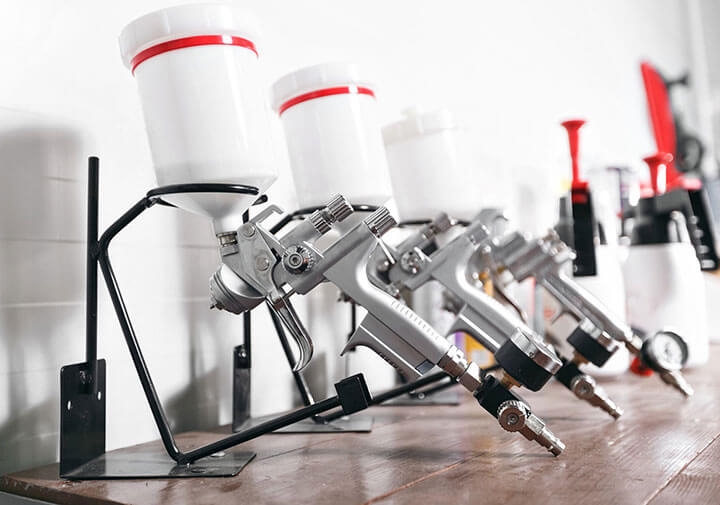

In modern industrial production, automatic spray guns are widely used in various surface coating operations due to their high efficiency and stability. However, during actual operation, several common issues may arise. If these problems are not addressed promptly, they can not only affect the quality of spraying but also cause production line downtime and result in losses.
First, one of the most common issues is uneven spraying or intermittent material output. This is usually related to insufficient air pressure, poor airflow, or blockages in the liquid supply system. For example, if the air compressor’s power is insufficient or the main air pipe diameter is too small, some spray guns may not function properly when multiple guns operate simultaneously. In addition, if the liquid adjustment valve is not opened or there is no material in the supply tank, the spray gun will not be able to deliver material steadily.
Secondly, abnormal spray patterns are also a frequent concern on site. When the nozzle or air cap is blocked, damaged, or has foreign matter attached, the spray pattern can become skewed to one side, the spray width cannot be adjusted, or the pattern may appear as droplets. This not only affects the appearance but also leads to material waste.
Poor atomization is another major issue. When the atomizing air pressure is insufficient or the coating material is too viscous, the sprayed particles become coarse, resulting in an uneven surface or even an "orange peel" effect. In such cases, it is necessary to check the air pressure settings and adjust the dilution ratio according to the properties of the material.
Additionally, nozzle or needle valve leakage or dripping is also common. This is mostly due to poor fit or wear between the needle valve and nozzle, or aging and damage of sealing components. If not replaced in time, dripping during spraying will seriously affect the quality of the workpiece.
Finally, after long-term use, internal components such as needle valves and sealing rings may wear out or corrode due to high-frequency movement and rapid liquid flow, causing the nozzle orifice to enlarge and atomization performance to deteriorate. Therefore, regular inspection and maintenance of automatic spray guns, timely cleaning, and replacement of easily worn parts are key to ensuring spraying quality and production efficiency.
In summary, common issues with automatic spray guns are mostly related to air pressure, material supply, component wear, and daily maintenance. By strengthening management and maintenance of these aspects, the service life and spraying quality of automatic spray guns can be effectively improved, bringing higher efficiency to production.